
Cordless vs Corded Drill: Which One Do You Actually Need at Home?
If you're buying your first drill, or replacing an old one, the cordless vs corded question is the first decision to make — and for most home use, the answer is more one-sided than you'd think.
Corded drills: more raw power, less freedom
Corded drills deliver constant power with no battery to worry about, which matters for heavy, continuous jobs like mixing paint or drilling into masonry all day. The trade-off is obvious: you're tied to a socket, and trailing a cable across a room or up a ladder is genuinely annoying for anything other than a fixed workbench job.
Cordless drills: for almost everything else
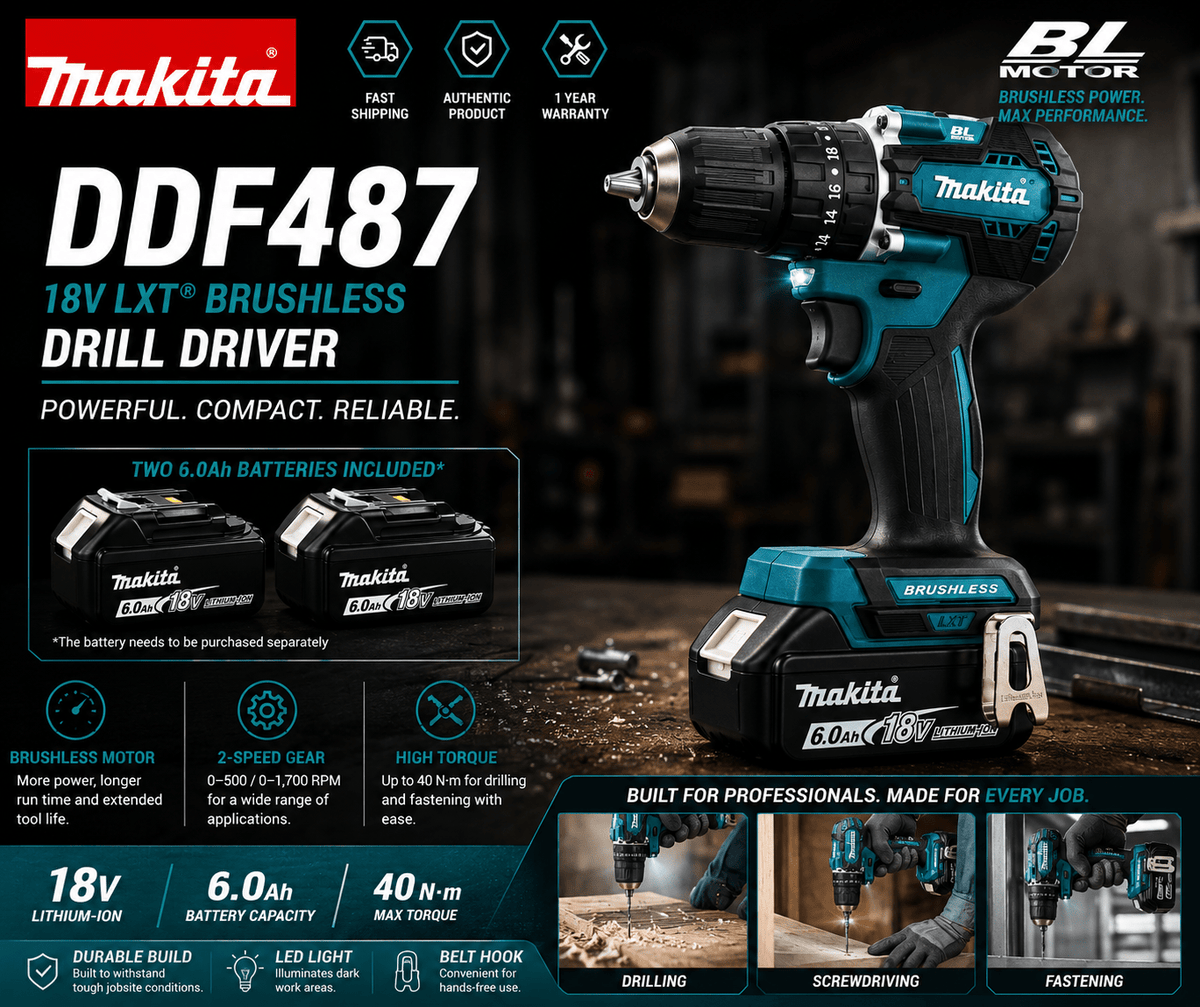
For flat-pack furniture, shelving, picture hanging, small repairs, and general household DIY, a cordless drill covers it comfortably. Modern brushless cordless drills (like Makita's 18V LXT range) close most of the old power gap with corded models, while giving you the freedom to work anywhere — lofts, gardens, ladders, other rooms — without a cable in your way.
What to actually check before buying
- Brushless motor — more efficient, less heat, longer tool life than older brushed motors.
- Battery voltage and capacity (Ah) — lighter jobs are fine on a smaller battery; if you'll be drilling into masonry or doing longer sessions, a higher Ah battery avoids constant recharging.
- Torque settings — useful for driving screws without stripping them, not just drilling holes.
Our pick
The Makita DDF487 18V Brushless Cordless Driver Drill is a genuinely capable option for home use — brushless motor, and available bare or bundled with battery and charger depending on what you already own. Prices start from £42.28.
Bottom line: unless you're doing continuous heavy-duty work in a fixed spot, cordless is the more practical choice for a home toolkit.